Monday, November 4, 2019

Obituaries for Laurel: Artist and Laundress Charity Goviens (1820?-1878)

Obituaries for Laurel

Charity (Bayly) Goviens/Govans (1820?-1878), Chenille Artist and Laundress of Old Town, Baltimore
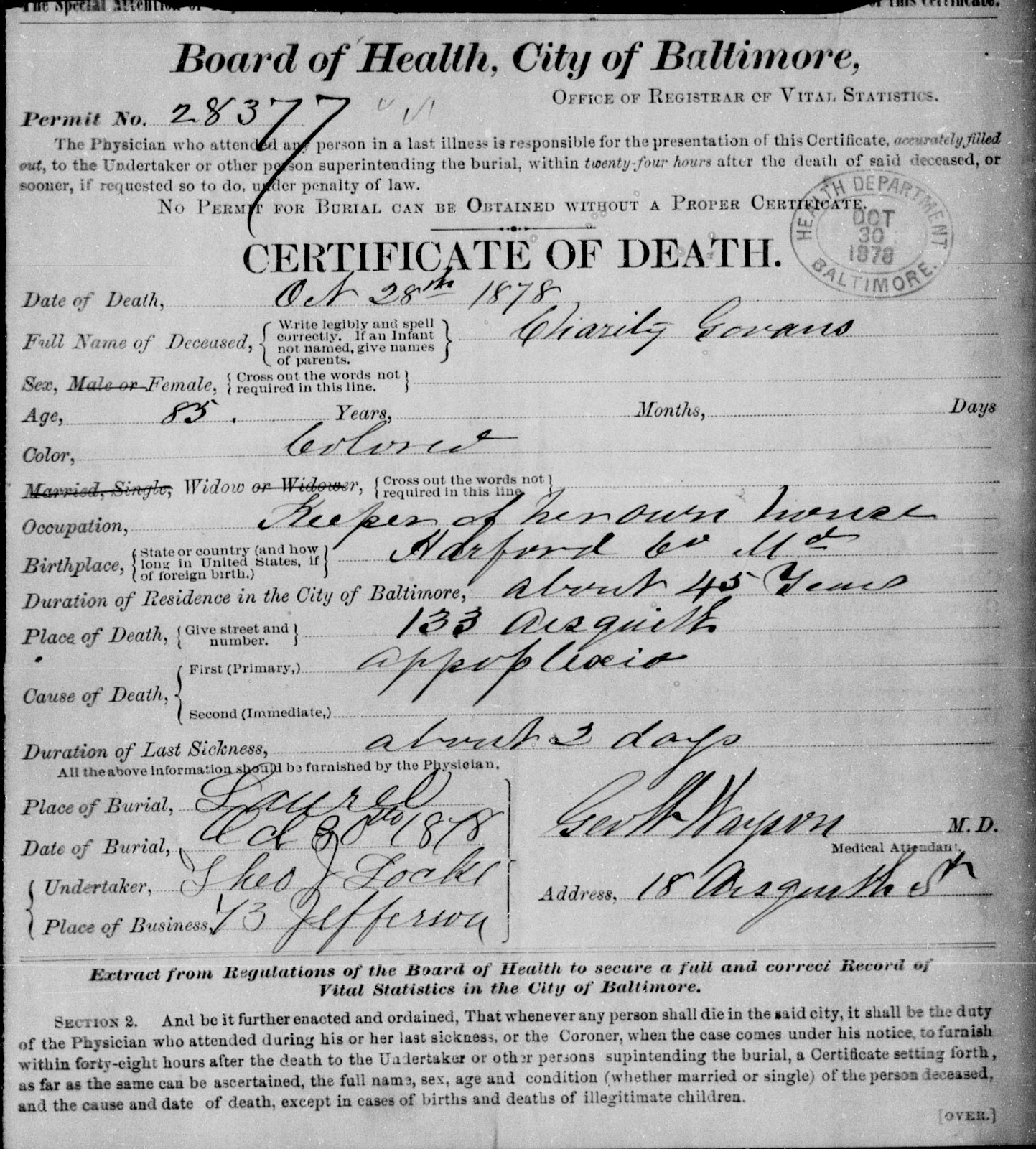
On October 28th, 1878, Charity (Bayly) Goviens/Govans died at her long-time residence on Aisquith Street in Baltimore at the age of 58.[1] Her occupation is listed on the death certificate as “keeper of her own house”, and the cause of death appoplexis.[2] She was attended by George W. Wayson, M.D., who lived at 18 Aisquith Street, and prepared for burial by undertaker Theo J. Locke of 73 Jefferson Street, also close by. She was buried in Laurel Cemetery.[3]
Charity had resided in Baltimore for at least 38 years, over half of which time she lived at 133/609 Aisquith Street. She and her daughter Charity remained proud of the spelling of her husband Daniel’s actual last name, Goviens, while the directories and the census takers persistently corrupted it to “Govans” or some other variation.
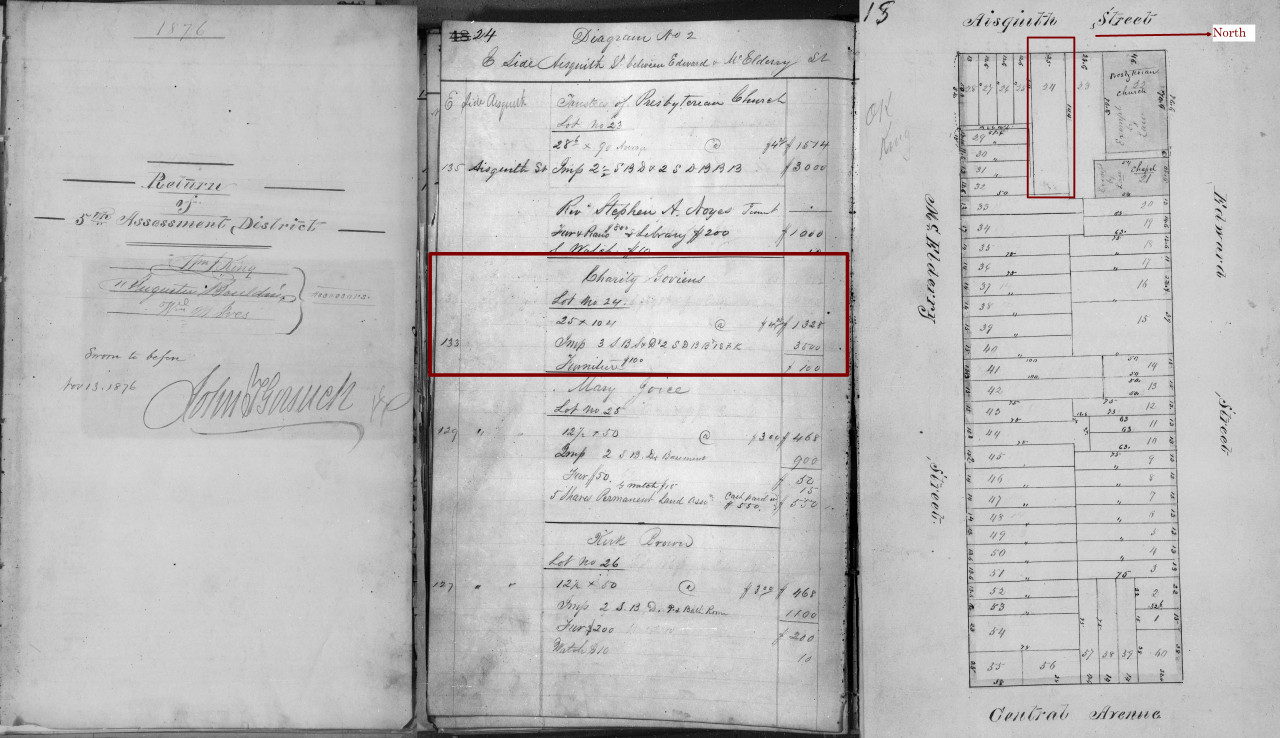
1876 Tax Assessment on Charity Goviens/Govan’s 3 story brick residence and lot

next door to the Aisquith Presbyterian Church property. In 1876 her next door neighbor at the parsonage

was Reverend Stephen Noyes, pastor of the Church. With the renumbering of houses in Baltimore City in the late 1880s, 133 became 609 Aisquith Street and by 1880, the Aisquith Presbyterian Church had moved from the neighborhood to be replaced in the same building by Ohel Yakov Synagogue.[4]

Recently Charity has been the subject of a few references in a book by Martha Jones, Birthright Citizens, in which Charity’s efforts to obtain a travel pass in the 1850s under the restrictive laws of Maryland is featured. While the efforts to identify Charity from the surviving records were extensive and accurately cited in Dr. Jones’s footnotes, the image of Charity and the story of her life that emerges from Dr. Jones’s pages is incomplete and misleading. Despite the oppressive and discriminating world of Baltimore, she and her husband prospered. She was more than a gilder of frames and a laundress for the more affluent white population of Baltimore. She was an accomplished Chenille embroidery artist and possibly an important connection to the underground railroad to Canada, the destination for which she applied for, and was granted a travel pass by the Criminal Court judge of Baltimore City, Henry Stump, about the time of her return from Canada. It is likely that she went to Canada without a pass issued by the Court, but knew that to be able to return in safety she would need one. On June 26, 1854, on the written recommendation of David Stewart, John Stewart, and James A. Buchanan, Esq., Judge Stump retroactively approved her travel out of the State of Maryland for the space of three months.[5]
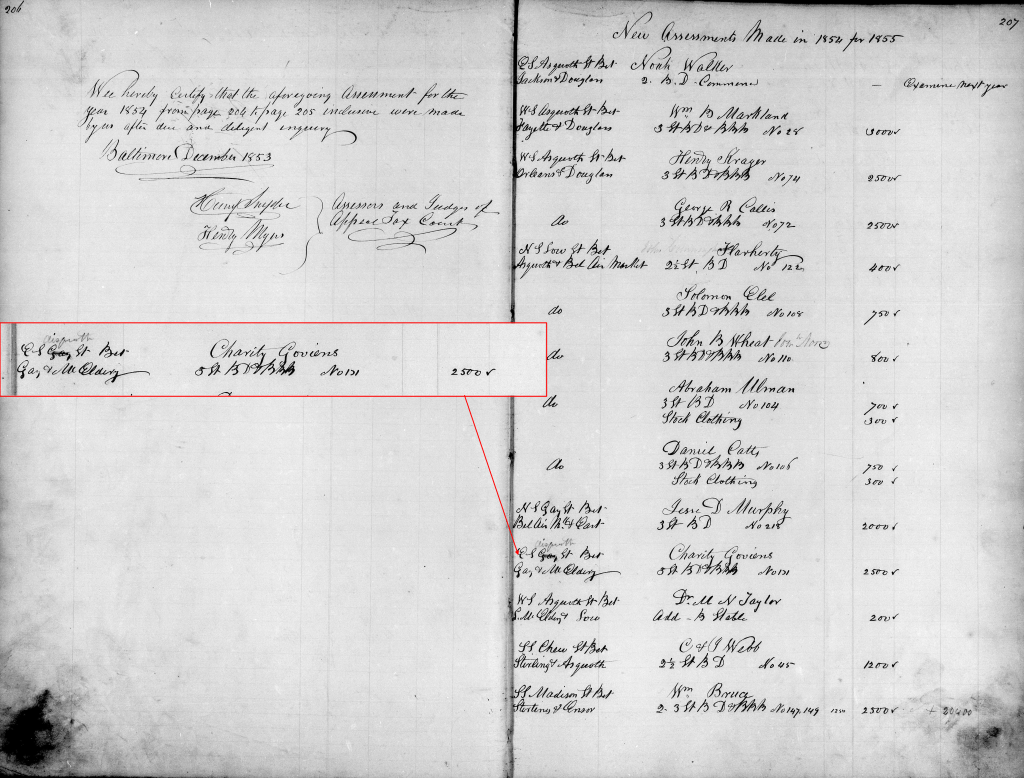
http://mdhistory.msa.maryland.gov/bca_brg4_2/bca_brg4_2_bca366/html/brg4_2_bca366-0137.html

Charity Govien’s maiden name was Bayley, and by 1840 she was married to Daniel Goviens, a Free Black owner and the proprietor of a feed store on North Gay Street who was several years her senior. An indicator of Daniel’s wealth is to be found in 1845 when their home was robbed:
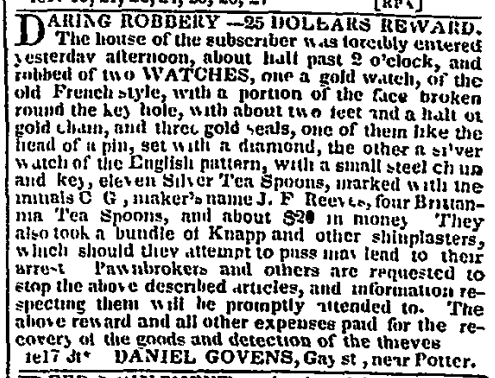
Baltimore Sun, February 17, 1845

Daniel Goviens first appears on the Baltimore City tax lists in 1813 on North Gay Street between Potter and Exerter Streets, in the two story brick dwelling with a feed store and granary where he and Charity were living by 1840.[6] Their daughter Charity was born about 1842.[7] There is no record of their having any other children, although Daniel did have Goviens relatives who he provided for in a deed of Trust intended to protect Charity’s interest in their home and store.[8]
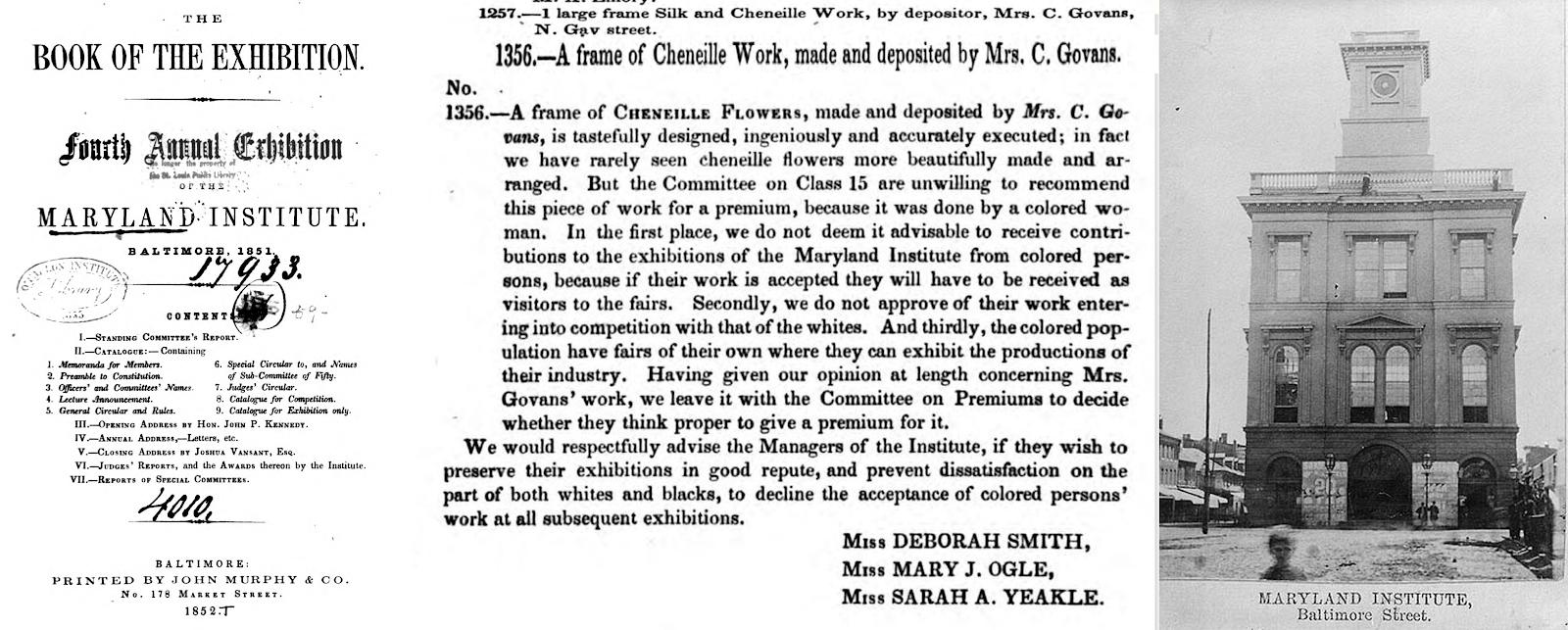
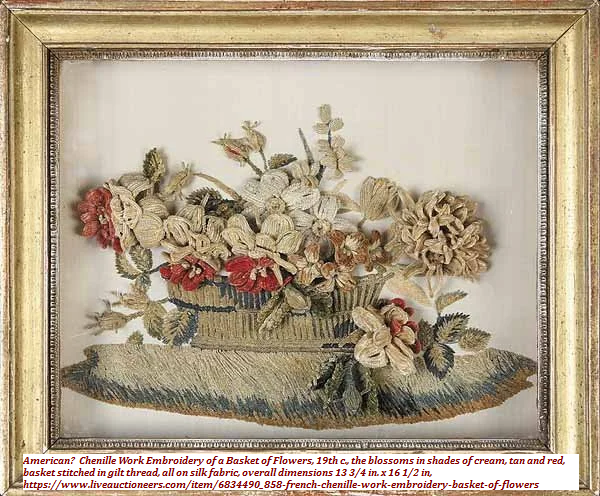
Charity first appears by name in print and on public record in 1851 when her delicate Chenille work was rejected by the Maryland Institute, not on the grounds of quality, but because it “was done by a colored woman.” the judges praised the quality of her work noting that

In the first place, we do not deem it advisable to receive contributions to the exhibitions of the maryland Institute from colored persons, because of their work is accepted they will have to be received as visitors to the fairs.

Secondly , we do not approve of their work entering into competition with that of the whites.

And thirdly, the colored population have fairs of their own where they can exhibit the productions of their industry.[9]

Charity took her art work to Toronto, Canada, in 1853, where it was favorably received, and reported to Frederick Douglass’s Rochester, New York newspaper:

TORONTO, August 12, 1853.

DEAR Mr. EDITOR: - Not long since, I saw in this city, in a large, splendid guilt frame, a piece of fanciful workmanship, which has been the admiration of all who have seen it. It was the work of Mrs. Charity Govans , recently of Baltimore. This lady was by the very general invitation of the managers of the Maryland Institute, to "all engaged in industrial pursuits not only in Baltimore, and the state if Maryland, but throughout the United States, to contribute specimens of their productions for public inspection, and to compete for the prizes offered by the Institute," induced to contribute the unsurpassingly beautiful production of her skill, ingenuity and taste, if which we have spoken. This work was one of so much merit and attraction, that it was generally anticipated that the artificer would be most signally rewarded. How signally, however, you will be better prepared to learn, after you shall have read the following notice and rule extracted from the printed "regulations and arrangements for the fourth annual exhibition of American Manufactures, by the Maryland Institute, held in Baltimore, October, 1851, and signed by the chairman and standing committee on exhibition: "The particular attention of contributors and others is requested to these rules, ad they will in all cases, be adhered to and enforced." - Rule "15th. The judges are required to make their decision strictly upon the merits of the article alone, and to make full reports in writing to the "Committee of Awards, &c."

Accordingly, we have [a] sufficiently "full report, in writing," as it regards Mrs. Govan' s work. I have copied it from the published reports for the edification of your numerous readers-

"No. 1356 - A framed of CHENILLE FLOWERS, made by Mrs. C. Govans , is tastefully designed, ingeniously and accurately arranged. But the committee on Class 15 are unwilling to recommend this price of work for merited. First, because, it was done by a colored woman. In the second place, we do not deem it advisable to receive contributions to the exhibitions of the Maryland Institute from colored persons, because if their work is accepted, the will have to be received by visitors to the fairs. And thirdly, the colored population have fairs of their own, where they can exhibit the productions of their industry. Having given our opinion at length concerning Mrs. Govan' s work, we leave it with the Committee on Premiums to decide whether they think proper to give a premium for it. We would respectfully advise the Managers of the Institute if they wish to preserve their exhibition in good repute, and prevent dissatisfaction on the part of whites and blacks, to decline the acceptance of colored persons' work at all subsequent exhibitions."

MISS DEBORAH SMITH.

MISS MARY I. OGLE.

MISS SARAH A. YEARLY.

---

The Committee are unwilling to recommend this piece of work for a premium, because it was done by a colored woman. The reason here given for this magnanimous treatment is indicative of a littleness, dwarfish caliber and ineffable meanness soul, which in despite of the copiousness of our language, and its adaptedness to the expression of every shade of thought and sentiment, it is exceedingly difficult to describe in terms sufficiently appropriate. Look at it: We are unwilling to discharge an obviously assigned duty, a simple act of Justice to a lady of intelligence, wealth and standing, because she is a colored woman. The singular frankness - not to say shameless - of an avowal of a reason so despicable, and that by ladies whose self respect permitted them to give their names to the scrutinizing gaze of the world in such a connection, its a mournful evidence of the full influence of those Institutions and prejudices in the United States, which deteriorates and destroys all that is lively and liberal, just and humane, in the human character. These ladies, and all whose feelings are equally groveling, should receive the pity of the truly wise and excellent of the earth, to throw intrinsic nobility they are strangers, and whose good opinion they are incapable of appreciating. We pity them, because we cannot deny them. Again; "if their work is accepted, they will have to be received as visitors to the fairs." A horrible consequence truly! They will then be in the same room with ourselves, walk the same floor, and gaze upon the same objects. Intolerable! Well, one thing is certain and inevitable; either the fastidious taste of these ladies will have to undergo a seasonable and serious change, or they will be unable to enter the kingdom go God with many of these despised ones; for "there shall, in now wise, enter into it anything that defileth;" their vitiated taste will exclude them. Are they prepared for the stern, the unavoidable alternative? These considerations, however, weigh but little in these days of fashionable, time serving Christianity. But we must not forget that colored persons are not excluded from these fairs, if they willingly accompany white visitors as servants. Special provisions is made for all such. The green eyed monster cannot brook the sight of a colored gentleman or lady, whose condition is above that of a servant. - Let him not be alarmed when I tell him that such sights will become increasingly annoying, and they are destined to put the severest test the religion and philosophy of the American Union. He would do well to make a virtue of necessity. "Thirdly, the colored population have fairs of their own, where they can exhibit the productions of their industry." True, but they would no longer remain in comparative obscurity; they would occasionally place some of the productions of their skill in just a position, I and in competition with those of their paler brethren. Speak out, ladies, all you objections - your worst fears in regard to such a competition. Remember, we have given you credit for your frankness. "We would respectfully advise the Managers of the Institute if they wish to preserve their exhibitions in good repute, and prevent dissatisfaction on the part of both whites and blacks, to decline the acceptance of colored person's work at all subsequent exhibitions." - Thank you ladies, we think we understand you. You mean to say that if colored competitors should be successful, as was Mrs. Govans , in winning admiration, and deserving highest premiums - of which there would be a great probability - then the Institute would suffer in it reputation; and dissatisfaction on the part of unsuccessful competitors as among the whites, would be as inevitable as it would be with the successful rivals among the blacks to whom your silly prejudices would render you incapable of doing Justice. In view of this unpleasant state of things, I thank God that I am no more an inhabitant of your country - my native land - but that it is my privilege to rejoice that I am now,

A COLORED CANADIAN.[10]

At the time of the exhibition at the Maryland Institute and her travel to Canada where there was a large expatriate former slave community from Maryland, Charity was living on North Gay Street in Baltimore on the East side of the Jones Falls, with her husband Daniel, who is listed in the 1849/50 Baltimore city Directory at 161 North Gay Street.[11]

While there is no record of when she actually returned from Canada, she was resident on Aisquith Street for certain by 1854, and probably had come back in late 1853 or early 1854 after her husband dissolved the trust he had established to protect her interest in their home on North Gay Street. It would appear that Daniel used the proceeds of the sale of their North Gay Street home to build her a new home at 133/609 Aisquith.

Why Charity journeyed to Toronto and then returned is not known, but with the passage of the Fugitive Slave act of 1850, life for Free Blacks in Baltimore became increasingly difficult, and at any moment slave catchers might snatch those who thought they were free back into slavery.
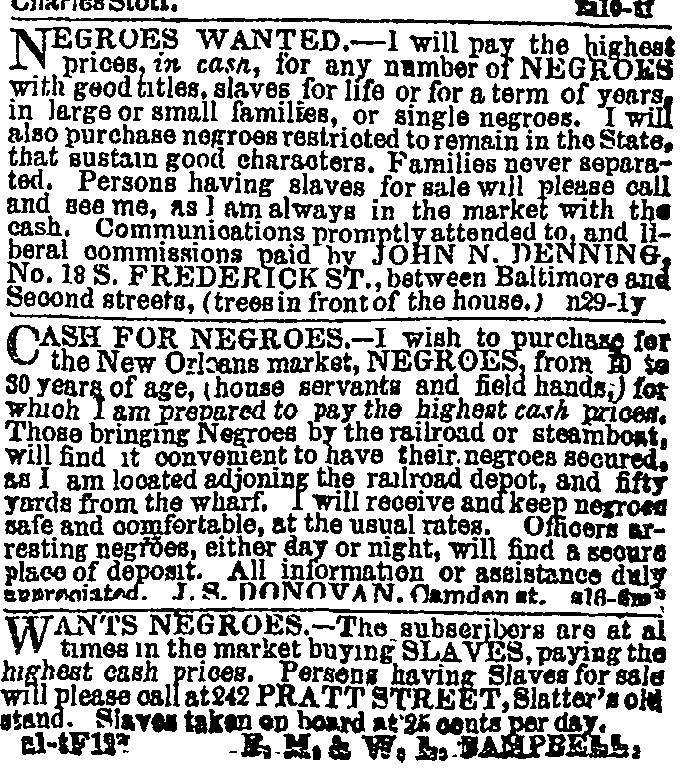
The Sun (1837-1994); Baltimore, Md. [Baltimore, Md]07 Jan 1850: 4

Baltimore was the epicenter of the Domestic Slave Trade to New Orleans. Demand for slaves was high and advertisements of Cash for Slaves appeared with regularity in the Baltimore press. It is possible that Charity was only living as free and that she had fled to Toronto, leaving her husband to find the means to buy her freedom. Or perhaps he planned on following her and became ill, causing her to return to a city that was increasingly distrustful and suspicious of the ‘free’ Blacks within its midst and whose slave owners would actively pursue those slaves that dained to flee to what they hoped would be a more hospitable place.
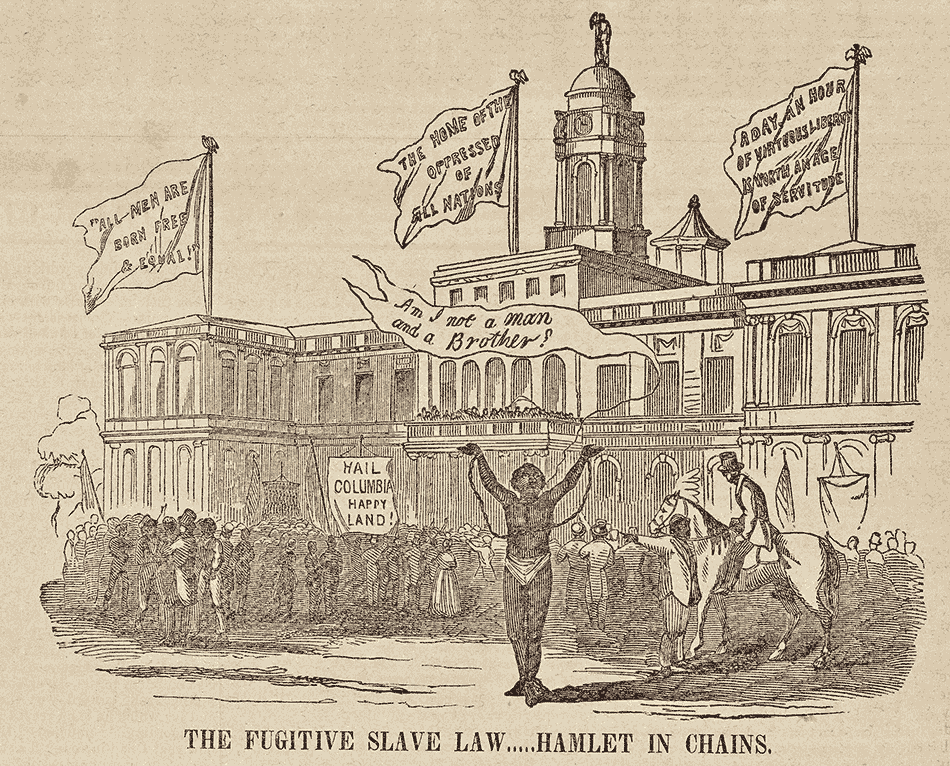
Rare Books and Manuscripts Library, Columbia University

James Hamlet, the first person returned to slavery under the Fugitive Slave Law of 1850, in front of city hall in New York; engraving from the National Anti-Slavery Standard, October 17, 1850. Hamlet was returned by force to Baltimore, but ‘by the time this appeared in print,’ Eric Foner writes in Gateway to Freedom, ‘New Yorkers had raised the money to purchase Hamlet’s freedom and he was back in the city.’ [source: https://www.nybooks.com/articles/2015/06/04/fugitives-who-changed-america/]

It is well known that the very first case of a fugitive slave captured and hailed before the new commissioners created by the 1850 Fugitive Slave Law was James Hamlet from Baltimore, claimed by the mother-in-law of a clerk at the shot tower, Thomas J. Clare, who was also the Treasurer of the Maryland Institute. He collected the $800 that was raised in New York to free Hamlet from his mother-in-law, Mary Brown, who resided with the Clare’s, a sum sufficient it would seem to help purchase or rent a new home on Hollins Street extended.[12]

Whether or not Charity sought safety in Toronto, she returned to Baltimore a free woman of means. Beginning in 1853 and until her death in 1878, Charity was taxed for a three story brick building on North Aisquith Street, initially numbered 131, then 133, and finally, after 1886, 609.
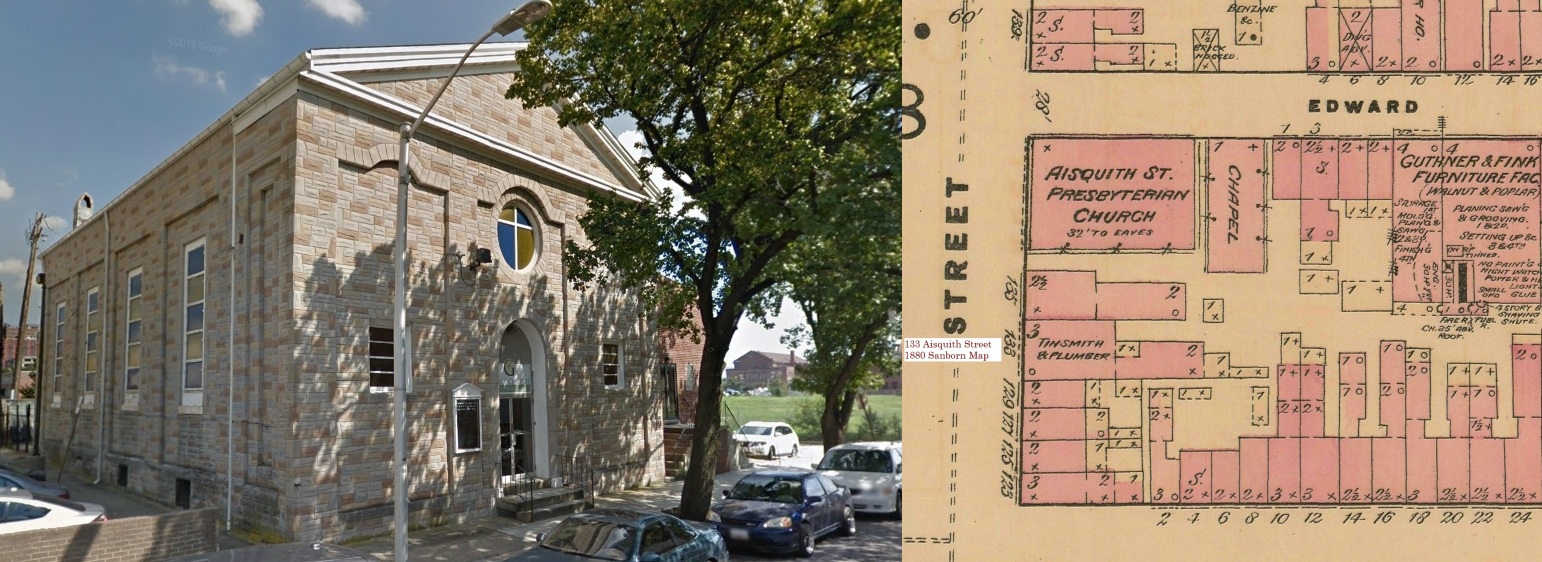
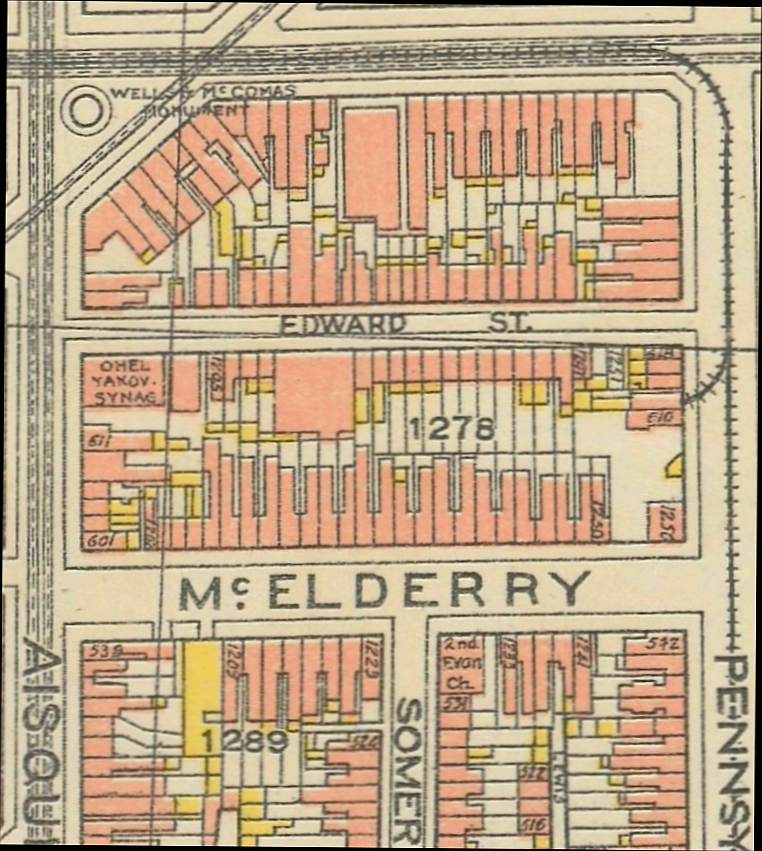
[detail, 1914 Topographical Survey of Baltimore]

After Charity’s death in 1878 the house number on Aisquith Street was changed to 609. By the 1960s

the front of the building was a laundromat, and by the 1970s a vacant lot approximately where the white car beyond the church is parked. Charity’s house is shown on the detail from the 1880 Sanborn Insurance map with the store front of the building rented by a tinsmith and plumber. By 1914 the Church was synagogue as shown on the 1914 topographical survey..
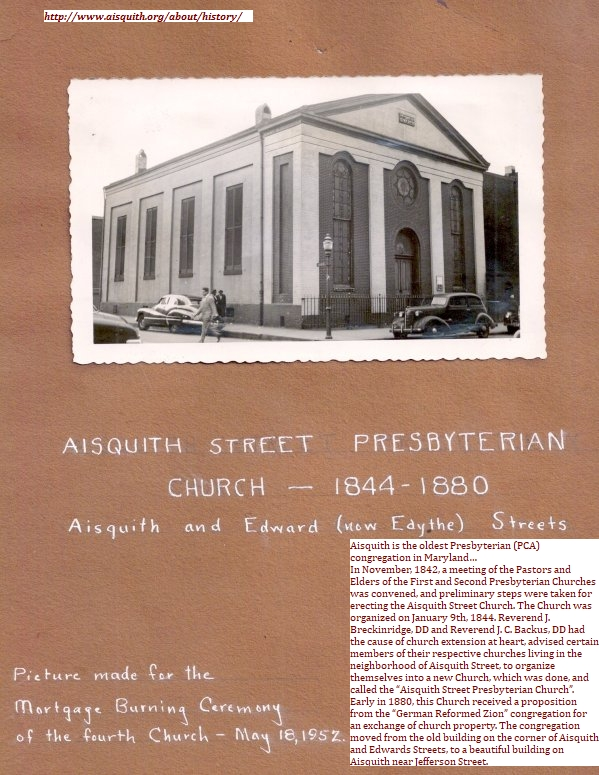
Charity lived two doors down from the all white Aisquith Presbyterian Church, which is today Greater Grace Harvest Church.[13] She may have attended Bethel or Waters AME church, which was nearby, but her son-in-law, Burwell Banks, who lived with her for a time in the 1860s and early 1870s, was a long-time vestryman of St. James Episcopal Church.[14] Charity’s home survived until the 1970s serving in its last years a laundromat, somewhat fitting, as in her last years her occupation was listed as a “laundress.”[15]
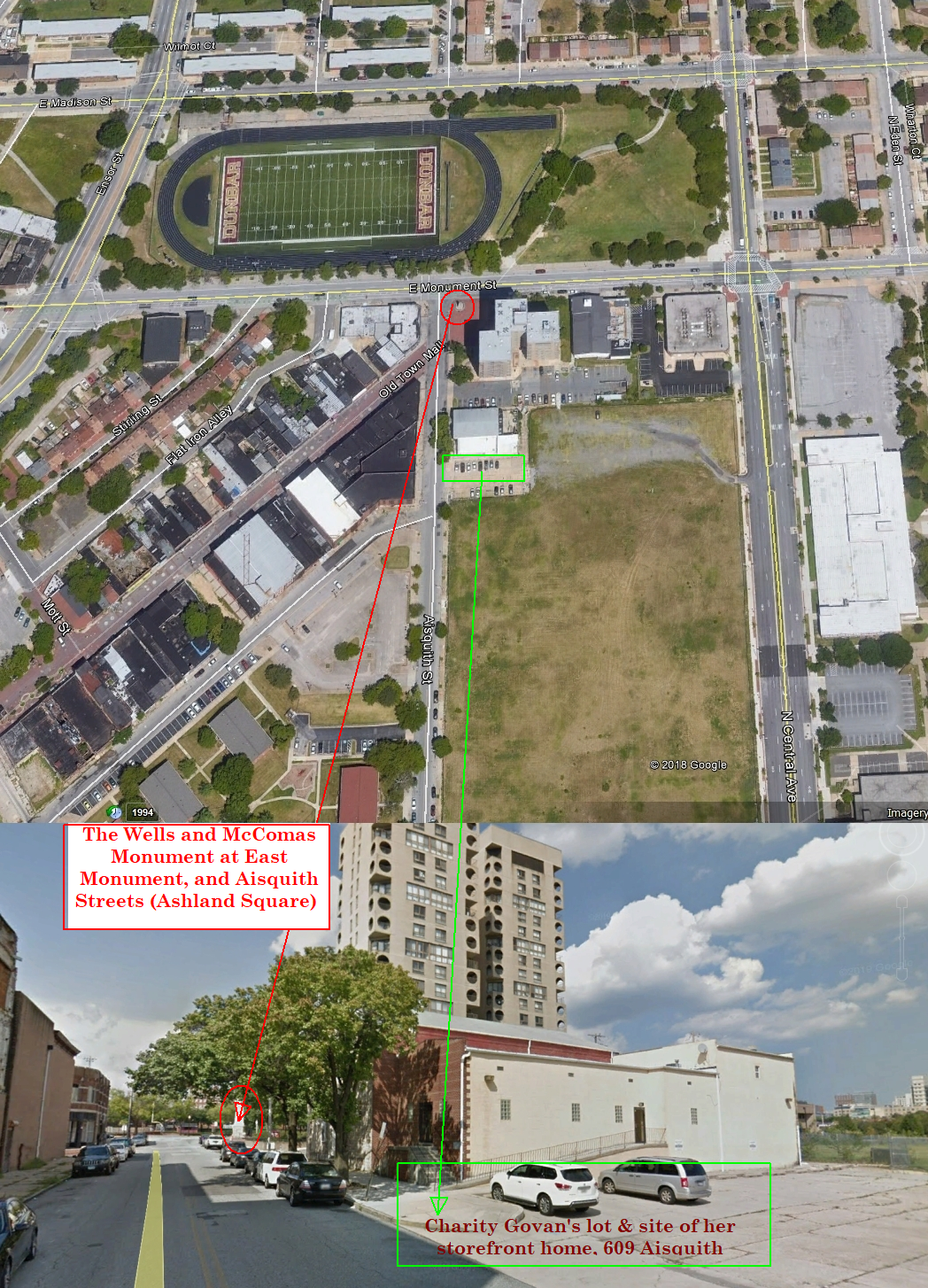
Composite from Google Earth images, captured 2019/11/18 indicating the site of Charity Govien’s house and the Wells & McComas monument at the end of her street, erected in 1873, five years before Charity’s death[16]

Today the site of Charity’s house is a vacant lot, a casualty of the failed urban-renewal development of Old Town.[17]

After her return from Canada, Charity lived a quiet life of domestic service. In the one public notice of her that appeared in the Christian Recorder October 10, 1863, she was mentioned as the wealthy mother of an “accomplished daughter” also named Charity who was about to be wed to a “Mr. Bromwell [Burwell] Banks,” a wealthy Baltimore grocery “Provisioner” who supplied the fashionable hotels of Baltimore including the Rennert, and who owned considerable real estate in the city.[18]

In 1870, while Burwell Banks and his wife, Charity Govan’s daughter, Charity, were living at 133 Aisquith, Catherine Labeat (age 60), ten years older than Charity Govan, was resident there as well. Who Catherine Lebeat was, is unknown, but she might have been Charity’s teacher of Chenille work, and possibly an Oblate Sister whose order was well-known in Ante-bellum Baltimore for training Black girls in Chenille and expert needle work. [19]

In the same Christian Recorder article recording the prospective marriage of Charity’s daughter, it was observed that “Our city has been in a state of joyful excitement for several days or weeks past. The first outburst of joy was caused by the military authority opening the slave pens and letting all the slaves go free. The men all went out and joined the regiment, and the women found comfortable homes among the friends in the city.”[20] Perhaps Charity took in some of the women at 133 Aisquith?

It would be a very long time before full citizenship came to the Black Community of Baltimore, and it would not be until the 1930s that the Maryland Institute would exhibit the work of Black artists like Charity Govans,and even then it would be controversial.
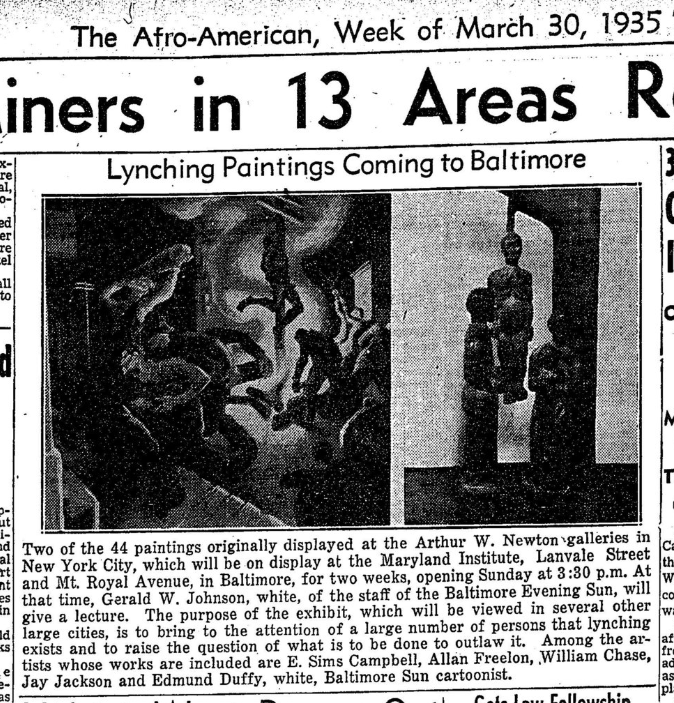
Among the Black Artists in the exhibition were

Cartoonists Elmer Simms Campbell and

William Chase of possible Maryland descent, but no Black women [21]

By all public accounts, Charity was among the wealthiest of the Black community of Baltimore by the time of her death. In 1870 she was noted on the Census as possessing $8,000 in real estate, while her son-in-law (Burwell Banks) who in 1870 lived with her at 133 Aisquith, and owned a prosperous produce business, was credited with $15,000 in real estate and $1500 in personal property. When she died in 1878 she left an inventory of personal property worth

nearly $1400, including $54 in cash in the house and $1200 in a bank account.[22] Among her

personal effects, apart from a feather bed, a horsehair couch, lace curtains, a table, 13 chairs and a sideboard, were two pieces of “framed embroidery,” perhaps the very same Chenille work that was rejected by the Maryland Institute and carried with her to and from Canada?[23]

When Charity Goviens died, her examples of Chenille work passed to her daughter Charity Goviens Banks, along with the house and storefront and the rest of her mother’s property, which in turn were left to Burwell Banks:
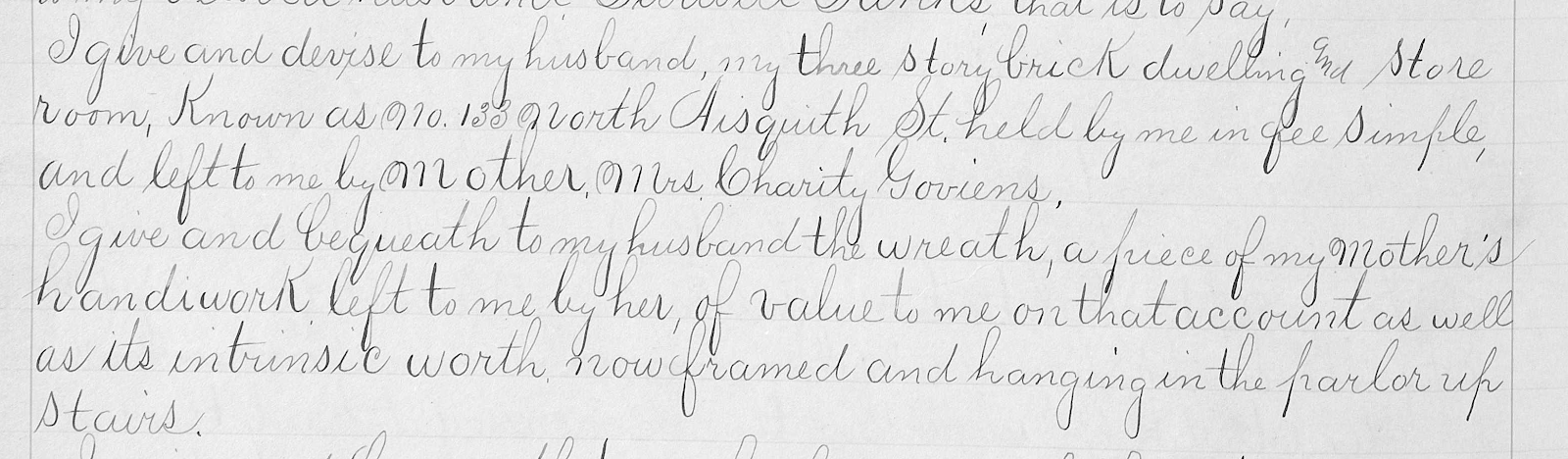
Excerpt from Charity Goviens Banks will probated in 1886, leaving her mother’s framed

Chenille work and the house to her husband, Burwell Banks[24]

Sadly neither Charity Goviens, nor her daughter and son-in-law, would be permitted to rest in peace, memorialized in Laurel Cemetery where they were all laid to rest. Their remains may still be there under the blacktop of the shopping center, moved and covered over by bulldozers that desecrated the graves.[25]

Revised by Ecpclio, 2019/11/18


[1] Death certificate, Msa_cm1132_010_cr048054-28377. Sorting out the Charity Govans who appear in the public records and the city directories of Baltimore is a daunting task. The ages on the census records are unreliable estimates, and the city directories are far from complete or accurate, but the surviving documentation strongly suggests that the Charity who was denied the right to exhibit her work at the Maryland Institute, was living on North Gay Street with Daniel Goven (Goviens) in 1840 as a free woman without children, was living on Aisquith Street as early as 1854 in a house on which she paid taxes, with a daughter also named Charity who married Burwell Banks in 1863, and that she died in her home at 133 (later renumbered to 609) Aisquith Street in October 1878. Her death certificate asserts she was 85 at her death, but all the other evidence of her existence indicates that the number is reversed, and that she was instead ca. 58 when she died.

[2] Appoplexis uteri apparently was a medical term described briefly in the Journal of Obstetrics, volume 58, for 1908, p. 752, as meaning hemorrhaging of the uterus.

[4] Baltimore City Archives, Baltimore City Property Tax Records, field Assessors’ Work Books, BCA BRG 4-3, http://mdhistory.msa.maryland.gov/bca_brg4_3/bca_brg4_3_bca1626/html/brg4_3_bca1626-0455.html.

[5] Jones, Martha S. Birthright Citizens. A History of Race and Rights in Antebellum America. Cambridge: Cambridge University Press, 2018, pp. 98, 99, 100, 101. Professor Jones and her research assistants did discover many of the sources about Charity as cited in this essay, but failed to interpret them correctly, or overlooked their significance. Professor Jone’s Charity was only four years old in 1854. Charity Govans, the subject of this esssay, always lived on the East Side of the Jones Falls, not the West, while Professor Jones misses altogether the reasons for seeking a travel pass, as well as Charity’s considerable talent as a Chenille artist. For the travel pass, see: BALTIMORE CITY CRIMINAL COURT (Minutes) 1851-1971 T483-1, unnumbered folio at 1854, January 26. Buchanan and the Stewarts were prominent white members of the Baltimore legal and mercantile Community and can be found in the Baltimore City directory for 1851. Their connection with Charity is unknown.

[6] See: Goodson, Noreen J., and Donna Tyler Hollie. Through the Tax Assessor's Eyes: Enslaved People, Free Blacks and Slaveholders in Early Nineteenth Century Baltimore. 2017, pp. 66, 197, and the Baltimore Census for 1840.

[7] See 1870 census for Baltimore City where Charity Banks is listed as age 28.

[8] 1845, Baltimore County Land Records, TK348, ff. 551.

[9] The book of the exhibition. Annual exhibition of the Maryland Institute for the Promotion of the mechanic arts. Baltimore. Maryland Institute for the Promotion of the Mechanic Arts.Baltimore, 1852. http://hdl.handle.net/2027/uiug.30112098061366

[10] See: https://www.accessible.com/accessible/docButton?AAWhat=doclist&AAWhere=41&AABeanName=toc1&AANextPage=/printList2.jsp&AACheck=2.63.60.0.0a,

Collection: African American Newspapers, Publication: FREDERICK DOUGLASS PAPER, Date: August 26, 1853,Title: TORONTO, August 12, 1853. DEAR Mr. EDITOR: - Not long since,...Location: Rochester, New York.

[11] http://Ancestry.com 1840; Census Place: Baltimore Ward 3, Baltimore, Maryland; Roll: 158; Page: 102; Family History Library Film: 0013183, and 1849/50 Baltimore City Directory. Daniel does not appear in the 1851 Baltimore City Directory, nor does Charity. Charity first appears on her own in the addenda to the tax list for 1853/54, living at 133/609 Aisquith Street. Probate records for Daniel could not be located and, as he placed all his assets in recorded trusts for the benefit of his family, it is likely the property at 133/609 Aisquith passed to Charity without there being a surviving chattel, land or probate record at the time. By the time of her death in 1878, there was sufficient proof of her ownership that the property passed to her daughter Charity Goviens Banks without dispute, and she in turn left it to her heirs among whom was a Calloway, perhaps related to Cab Calloway..

[12] IMPORTANT FUGITIVE SLAVE CASE: First Arrest of a Fugitive Slave under the new Act Highly Important Proceedings, and Great Excitement among the Colored People

The Sun (1837-1994); Baltimore, Md. [Baltimore, Md]30 Sep 1850: 1, and Baltimore City Directory, 1853-54. Once the price on his head was paid, James Hamlet was manumitted: Light complexion, height: 5'6.5', raised in Baltimore County, scar on left side of cheek, manumitted on October 4, 1850, Liber AWB#81, p. 19. AW Bradford, Clerk, witnessed by Thomas J. Clare. (See entry for James Hamlet at: http://slavery.msa.maryland.gov/)

[14] Baltimore Church Advocate, Saturday, February 13, 1892.

[15] Hellier Business Directory, 1863/64, Laundress living at 133 Aisquith.

[16] How Charity acquired 133 (609 Aisquith) is a complicated story of Daniel’s efforts to ensure that she was provided for through a number of recorded trusts that ensured Charity benefited from his real and personal property at the time of his death. For example see: Baltimore County Land Records, TK 348, ff.551-552. It appears as if Daniel revoked this trust and a subsequent one in order to sell their North Gay Street home and his business there for $7,000 in 1852 (see Baltimore County Land Records, ED 24, ff. 168), with which he probably built the three story brick home on Aisquith sometime in 1853. Daniel was taxed for the Aisquith street property as early as 1818 when there was a two story frame building on the property, but to date no record of his purchasing the Aisquith property has been located. It would appear that Daniel died sometime between 1852 and 1855. Charity alone is first taxed for the three story storefront brick home in 1854 which had a rental storefront on Aisquith to provide her with a steady rental income. (see: http://mdhistory.msa.maryland.gov/bca_brg4_2/bca_brg4_2_bca366/html/brg4_2_bca366-0137.html, and the Baltimore City directories for the address that indicates what businesses rented the storefront). Clearly Daniel made every effort to provide for Charity and their daughter. To date no probate records have been found for Daniel, nor has a recorded trust that specifically identifies the Aisquith street property been located, yet from 1854 on until her death, Charity paid taxes on the property and it descended to her daughter Charity Goviens Banks who was the administrator of her mother’s estate. A plausible scenario is that Daniel became ill while Charity was in Toronto and Charity came home to care for him. The last mention of Daniel in the city directories is his living at 134 Chestnut according to the 1855/56 Baltimore City Directory

[17] See http://mdlandrec.net, Baltimore City Land Records RHB 2941/676, other references to the “Old Town” renewal project. For Burwell Banks, see below, note 11.

[18]Burwell Banks was once arrested and fined for selling Quail out of season to the owner of the Rennert Hotel. When he died in 1891 he left a considerable estate, and was remembered as one of the first Black men to serve on a Grand Jury in the city charged with investigating conditions at the City Jail. See the Baltimore Sun for July 14, 1887, and August 29, 1891, the Baltimore Church Advocate for Saturday, February 13, 1892, and the quail incident in the Baltimore Sun for January 20, 1877.

[19] To date no evidence has been found of Charity Govans having attended the school for girls founded by the oblate sisters, nor is there any surviving record found to date that illuminates the life of her boarder in 1870, Catherine Lebeat. For Charity Govan and those residing with her in 1870, including Catherine Labeat, see: 1870 Census, Ward 5, Dwelling no. 2033, with real estate owned or leased by Charity worth $8,000, on Ancestry.com, 1870; Census Place: Baltimore Ward 5, Baltimore (Independent City), Maryland; Roll: M593_573; Page: 276B; Family History Library Film: 552072. The Oblate Sisters history in Baltimore is to be found in summary form on their website: http://oblatesisters.com/our-history, from which the following is derived:

The Oblate Sisters of Providence is the first successful Roman Catholic sisterhood in the world established by women of African descent. It was the work of a French-born Sulpician priest and four women, who were part of the Caribbean refugee colony which began arriving in Baltimore, Maryland in the late eighteenth century. Father James Hector Nicholas Joubert, SS, a Sulpician priest discovered it was difficult for the Haitian refugee children to master their religious studies because they were unable to read. He heard of two devout religious Caribbean women who were already conducting a school for black children in their home in Baltimore. In 1828 those two women, Elizabeth Lange (later Mother Mary Lange ) and Maria Balas accepted his proposal to start a sisterhood with the primary mission of teaching and caring for African American children. After adding two more women, Rosine Boegue and American-born Theresa Duchemin, they began studying to become sisters and opened a Catholic school for girls in their convent at 5 St. Mary's Ct. in Baltimore. Thus began St. Frances Academy. It is the oldest continuously operating school for black Catholic children in the United States and is still educating children in Baltimore.​​

[20] http://accessiblearchive.com, Collection: African American Newspapers, Publication: THE CHRISTIAN RECORDER, Date: October 10, 1863, Title: For the Christian Recorder. Our city has been in a state of ....

[21] See: https://www.miba.online/blog/category/1935+Lynching+Exhibition and https://en.wikipedia.org/wiki/E._Simms_Campbell. There is no biography of Chase, but the Chase family was prominent as teachers, editors, and undertakers in both Baltimore and the District of Columbia. For example see: https://www.revolvy.com/page/William-Calvin-Chase?cr=1, and http://www.rememberingbaltimore.net/2019/06/a-teacher-among-teachers-reverend.html?m=1

[22] See: 1870 census entry for Charity and her daughter and son-in-law: https://www.familysearch.org/ark:/61903/1:1:MNS1-511. Charity’s probate is indexed at: https://www.familysearch.org/ark:/61903/3:1:939K-TR6N-K?i=1&wc=SNTB-L2S%3A146536701%2C146818601&cc=1803986, f. 72.

[23] BALTIMORE CITY REGISTER OF WILLS (Inventories) 1878-1879, JHB 111, MSA C196-47, 231-232.

[24] Baltimore City Will Books, 1886, RTB 56, 310 ff. Everett J. Waring was Charity Banks’s lawyer. It is not known if she and her husband, Burwell Banks, lost any money in the collapse of Waring’s Bank. See the Lexington Bank scandal at: https://msa.maryland.gov/msa/stagser/s1259/121/6050/html/17454000.html and a biography of

Waring.

Sunday, November 3, 2019

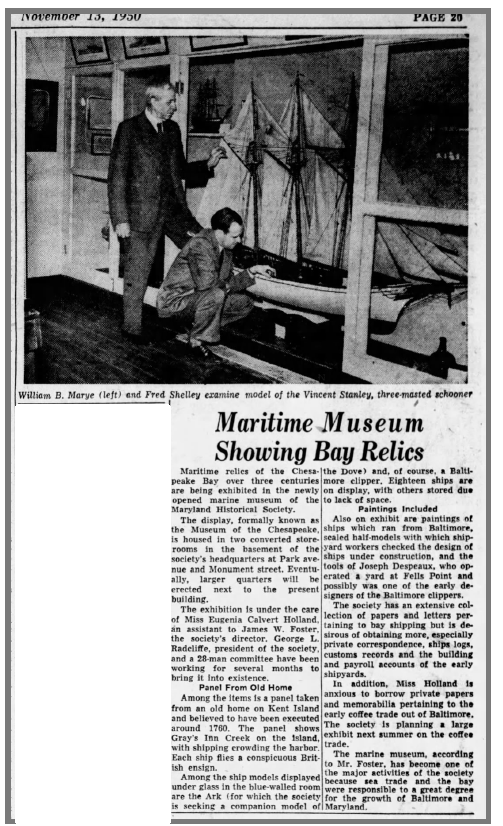
Purveyors of Baltimore History: William B. Marye (1886-1979)

WILLIAM B. MARYE

AN AMIABLE BALTIMOREAN

And Pioneer Environmentalist

(1886-1979)

by John McGrain

source: The Evening Sun, Baltimore, Maryland, 13 Nov 1950, Mon • Page 20 https://www.newspapers.com/clip/26697408/glr_13_nov_1950_mhs_maritime_museum/

William B. Marye was 84 years old when I first met him at his residence in the Preston Apartments in October 1969. I had gone down to talk about revising the "Literary Map of Baltimore," a chart that the Baltimore County Historical Society had paid for printing, and, which, thanks to me, contained a number of disgraceful errors and misspellings of the names of those the map sought to honor. Mr. Marye had known some of the people who pursued literature in Baltimore, and he suggested a number of additional names for the map. He had not been a close friend of Mencken, and in fact thought that Jesse Lee Bennett of the Baltimore Sun was as good a writer, in his own style. Baltimore had produced an extraordinary number of "poetasters," thought Mr. Marye; it was almost an aberration of the climate, as he put it. He had suffered a number of literary affairs in his time, and at some of them he said it was difficult not to laugh at the sincere readings of drivel. He was once lucky enough to hide his mirth behind a lady with an enormous flowered hat. Literary ladies had given him the notion that there were no intelligent women in Baltimore, in spite of all the colleges and businesses so full of them in the 20th century.

The Maryes were Virginians who happened to have a French name. The Battle of Fredericksburg took place, in part, on the lawn of the Marye clan's mansion, Brompton. Marye's Mill on the banks of the Rappahannock next to the railroad bridge appeared in all the Civil War artists' sketches and photographs of the town. After the war, some of the Marye brothers came to Baltimore and at one time owned the Pearl Hominy Mill. That mill was the ruination of the family, said WBM one time. Located on a Pratt Street pier, the mill burned and was never rebuilt. WMB's father, Nelson Marye, had to take up a clerical job in the city, although they were by no means ruined. "I have never enjoyed the Battle Hymn of the Republic," he once said, "because it was my people who were being trampled out with the vintage."

For the remainder of his life, WBM and I had a great many conversations by telephone and a number of visits to his apartment and encounters at the Maryland Historical Society. We didn't talk much about literature. WBM, as we will call him for short, liked to recall rural life in the Upper Falls area of Baltimore County. He was interested in old families, old land grants, hiking, fishing, Indian artifacts, and all forms of local history. He was interested in the ownership of mills and furnaces, but was not much concerned about their technology, which is now becoming more respectable to pursue under the heading of Industrial Archaeology. Even the mill technology of 1795 was more advanced than WBM's sphere of interest. A lot of Marye data went into the History of Agriculture in Baltimore County and into various booklets written by Matilda C. Lacey and by the history group at Perry Hall that published Villages in the 1990s.

In his youth, WBM had explored all the mill sites and all the trout streams in several counties, and he had almost total recall of all the facts he had gathered. His published articles were and continue to be the basis for almost everything written today about colonial history in Baltimore and Harford Counties. It as almost impossible to find any record he had not consulted and wrung dry. Even in his eighties, he was finding new items, still revising some of his earlier findings instead of merely defending them as writ.

WBM had never retired, because he had never exactly worked; he was never regularly employed, except as consultant archaeologist or genealogist, and he was the corresponding secretary of the Maryland Historical Society, which, if salaried at all would have been minimal. He lived somewhat modestly on money at interest. He used to say that he was not properly trained to do anything in particular--in spite of a degree from Johns Hopkins and further study of geology. WBM was a survival of a period when people of even modest means never did any type of manual work; the family had household servants, gardeners, a coachman, and farm managers. He once said that he always had to remind himself that in the 1970s, the person raking leaves in front of a Guilford house was probably the owner rather than the garden man. The landed gentry of the 1890s used to dress formally all day, even during the summer on the farm.

WBM's perpetual retirement was one of the most productive careers of any of Baltimore's "idle rich," as his vast accumulation of notebooks and published materials will attest. The extensive footnotes in his articles about the "Indian Roads" certainly meet the criteria of Germanic thoroughness aimed for in the earliest days at Johns Hopkins. The style of these articles is elegant in the 19th century manner, not without touches of irony and well disguised wit. During his time at Hopkins, some of the founding professors were still on hand--notably Gildersleve, although WBM had Kirby Flower Smith for classics and William Bennett Matthews for geology.

The Marye articles are a public monument and will endure. The man himself is a more fleeting image. In his ninth decade, WBM was quite talkative, almost exhausting to listen to at times. He was probably desperately lonely with all his immediate family long gone, and no descendants to watch over him. He had a horror of ending his days in a "home," and was luckily spared that degradation, dying of sheer old age in 1979. The constant recitation of stories and incidents about his parents helped keep them alive--I almost feel I know them myself.

WBM was essentially a gentleman. He rigorously observed the code of never giving offense, always suffering fools gladly, not writing abusive comments, trying not to insist on his own way, not exploding the reputations of fellow historians, especially the well meaning patriots who strayed into error and quoted old fantasies. WBM had served in the Navy during the first World War; his ship was sail-powered, and foul weather prevented it from reaching even Bermuda. He was a life long member of the Maryland Naval Militia and probably would have turned out, even in his eighties to fight another Battle of North Point. His patriotism was not indiscriminate, and in 1969 he was appalled by the U. S. conduct of the war in Viet Nam. This was the first adult that I respected who had turned against the war; it forced me to think, and, of course, thought could only lead to disgust with the entire incompetent and disastrous operation.

Mr. Marye was quite a tall man, heavy set even in his youth, slow and deliberate in his motion, somewhat stooped. Some of the amiable Baltimoreans were stooped, as if looking down on their visitor with amused interest. He was partially bald but benign in countenance. Like most elder statesmen of the Maryland Historical Society, he tried not to wear his spectacles unless he wanted to read something. He was one of the last of the "great walkers" about Baltimore, a town noted for persons who liked to stroll its length and breadth for sheer pleasure of ticking off the blocks or squares of row houses, passing the wharves, warehouses, and foundries. He liked to visit some of the underground storm sewers that were once natural streams, now trapped in pipes beneath the paving. There was a grating where one could see the natural flow of Jenkins Run, and WBM used to observe the waxing and waning of the volume after rains and during droughts. He had occasionally seen highly paid civil engineers sinking foundations where he knew they would shortly strike the water of some stream he had known about from deed research. No use to tell people like that, he felt; they wouldn't believe him. He at length admitted that a cab driver was likely to consider their passenger a mad man if the destination was the outflow of some storm sewer.

WBM had also walked extensively in the Orkney Islands--a bleak and elemental terrain he preferred to the architectural marvels of the Cathedral towns his parents went to see. Even in his last years, WBM liked to walk. He walked almost daily from his apartment at Preston Street and Guilford Avenue to the Maryland Historical Society. On the Tuesday in May, 1970, when hippies and unwashed ruffians terrorized the visitors to the Flower Mart in Mount Vernon Place, WBM wended his way through the throng on his usual route unaware of the subhuman disturbance. He was a familiar sight, shuffling along, sometimes wearing an ancient Panama hat in summer, fully bundled up in winter. Before I met him, I accidentally photographed him on his daily transit of Monument Street. If a satirical novel was going to be written about inside Baltimore, its acidic author would certainly utilize WBM, but anyone who actually knew him or any other true Baltimorean of his age and era could never treat so splendid a human type with levity.

WBM had in his memory the makings of his own "unprintable social history of Baltimore." Most of his social memoirs concerned prominent people who became tipsy or visited the sort of houses where Eubie Blake had played the piano. He had a stock of stories about people who were mean to the servants, or achieved marvels in stinginess and penury. He was well aware that some Baltimore socialites flaunted imaginary genealogies that connected them to various "lords and ladies." He knew who was not related to the Duke of Norfolk. He also had a stock of earthy stories, including numerous instances of plantation owners who forced their attentions on their slave women--one such lord of the manor was beset by his own dogs when he returned from the slave quarter in his night shirt--to the amazement of a house full of overnight guests who were brought to the windows by the barking. WBM also had a story of a hostess--whose family had launched clipper ships--in row house Baltimore--in one of the extra large row houses--the McK__'s were having a dinner party. No sooner was the first course served than the OEA workers arrived to pump out the servants' privy in the back yard; the dinner continued with all the windows closed, hot weather or not.

WBM was almost older than college football, but he liked canoeing and swimming. He had canoed in northern Ontario where the campers could hear wolves yelping. He had canoed most of the tidal rivers around Baltimore and Harford Counties. Some trips were veritable expeditions with a hired boatman for Marye and a few archaeologists. His early swimming took him to most of the deep holes in the same region--and of course boys of the 1890s didn't use swimming suits, which annoyed some people; once the owner of the Dieter Mill on Little Gunpowder Falls on the Harford County bank shouted out the window for the bathers to go away. WBM had also fished for trout in most of the rocky streams, many of which in 2004 are lifeless conduits of runoff.

Just about age 70, WBM turned to poetry and wrote A Farewell to Life, a gloomy assessment of how the inhabitants of this continent had all but ruined the land and water. It was written in a 19th century blank verse style, and it sold very few copies. Mr. _____ of the Sun told him that perhaps only 5 percent of the population could understand it. The author did receive a complimentary letter from John Masefield, Poet Laureate of England, and Josephine Jacobson of Baltimore apparently liked it. James Bready of the Sun literary page interviewed WBM about the time the book came out and noted that almost no copies were sold. Bready's column was however a tribute to WBM's archaeology explorations and gave him perhaps the only recognition he had ever received in his chosen city.

The last large plat drawn by WBM was for Matilda C. Lacey's 1970 booklet Perry Hall: An Invitation to Memory. This plat showed the boundaries of numerous colonial land surveys south of the Great Gunpowder Falls and east of U.S. 1-- all worked out from the verbal list of angles and distances copied from the old Patent Records. Colonial Land Surveys were chaotic, the boundaries rarely running east to west, rarely conforming to shore lines or hills or water courses either. The plat was covered with tiny lettering with useful historical data, but WBM was no longer steady enough to get his lines of text straight or the boundary lines sharp. The data is all there however, and some years later, I drew the lines again and had the text retyped on an electric typewriter.

WBM genuinely liked black people although his attitude might be called patronizing today. His grandparents owned slaves, and his parents had African American servants. One of his Virginia stories was about his grandfather's trying to beat one of the slaves; the ancestor picked up a stick from the ground , but it turned out to be rotten and broke apart and bumped the plantation owner on the nose--at that point both master and subject broke out laughing. Willie Marye's mother used to read to the black children of the domestics at Upper Falls, and WBM kept up with old employees, and even accepted an invitation to Christmas dinner. In those times, servants were called by their first names, but the coachman was called by his last name in the English style, "to confer dignity" on him, WBM stated. Mr. Marye had told another Baltimorean that Enoch Pratt had not really lived on a grand scale, because, like the Maryes, that businessman had only a coachman, but no footman, which would have marked total class. In fact, WBM, deep in the age of the automobile, was almost apologetic about never having enjoyed the services of a footman.

Many of the things that WBM wrote were used by the local papers, but he never got paid for his efforts and hidden expenses. Some of his genealogy work involved weeks of effort in libraries and his home study, yet his patrons often paid him less than he could have earned as a bean-picker. He always made his contribution to good causes out of a sense of civic responsibility, and as we stated before, he was ready to turn out for the last ditch defense of the city if another foreign invasion came to be.

[Subject to Revision, December 17,2004.]

Editor’s note:

The William B. Marye Award was created by the Archaeological Society of Maryland, Inc, in 1983 to honor individuals who have made outstanding contributions to Maryland archeology. Award winners receive a plaque at the Society's Annual Meeting in October, and their achievements are published in the Society's newsletter, ASM Ink. More than one award or no award may be given each year. Nominations should detail specific accomplishments of the nominee and should be submitted to the William B. Marye Award Committee either in a letter or on the nomination form published each year in ASM Ink. Neither Maryland residency nor membership in ASM is a prerequisite for receiving the award. Click here for a nomination form. For other information, please contact Maureen Kavanagh. (http://marylandarcheology.org/marye.html)


Saturday, November 2, 2019

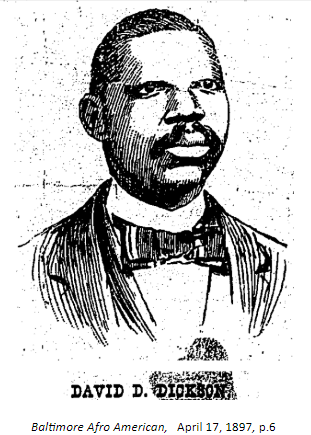
Obituaries for Laurel: From Janitor to Lawyer, David D. Dickson (1854-1908)

Obituaries for Laurel: From Janitor to Lawyer

DAVID D. DICKSON

(1854-1908)

By

Eva Slezak

Monday, January 4, 1886 witnessed the dedication ceremonies of the Enoch Pratt Free Library of Baltimore City. This notable event marked the beginning of a philosophy of service and education that was to leave an impact throughout the country in the years to come. On one hand, it was a departure from the usual concept yet, on the other, it followed the tradition of philanthropy that had been characteristic of Baltimore’s citizens of achievement and wealth. Enoch Pratt had stipulated that “The Library shall be for all, rich and poor, without distinction of race, or color, who when properly accredited, can take out the books if they will handle them carefully and return them.”[1]

Among the invited guests at the ceremonies were “several of Baltimore’s prominent colored citizens.”[2] One of the individuals noted was a Mr. D. Dickson who held the responsible position of janitor of the building. [3] The Library payroll for February 1885 only notes his salary of $30 per month. So who was this man, credited with such responsibility and apparently not unknown to the citizens of Baltimore’s black and white communities?

Originally from Norfolk Virginia, where he was born March 6, 1854, his family moved to Baltimore when he was quite young, probably in the late 1860’s. He entered the public schools and mastered all of the studies then available at the colored grammar school, which at that time was the highest school for black youth. A city ordinance of 1867 granted authorization for the establishment of public schools for black children, [4] but not until1883 were high school grades for blacks an actuality.[5] Dickson continued his studies on his own, probably aided in part by his cousin, Samuel Servent, who though a few years younger, was a private teacher. Described as coming from a “family possessing some degree of latent ability,”[6] it is no wonder that Dickson exhibited such an intense interest in and desire for knowledge and became active in literary, business and political circles.

David and his cousin shared the same address in 1878. By 1880, they had moved to 32 Tyson Street. Also in that same household was Samuel’s sister Ruth and their mother, Rachel, both laundresses. [7] By 1881, Dickson was using a middle initial, the third D, and had his own business, a confectionery store. The next decade was to be an intensely active and significant one for him. Two major desires evolved and came to fruition. One was to practice law and the other was to enter into political life in order “to consider the educational, industrial and political advancement and interest of our race.” [8]

One example of his early civic involvements was the 1880 Equal Rights Convention held in Baltimore on February 10. At that time, blacks comprised 16% of the city’s population, surpassed only by New Orleans and Washington, D.C. Statewide; the black population was almost 22.5% of Maryland residents. Five delegates, representing each ward were to assemble and to plan strategy in the interest of greater recognition of the politics of the state. After settling differences regarding contesting delegations, the convention elected permanent officers, appointed committees and adjourned with instructions to organize for active work within their wards.

Another example was an 1881 petition to the Mayor and City Council of Baltimore on behalf of the Colored Aged Men and Women’s Home on Lee Street between Howard and Sharp Streets. Dependent on the charity of the public, the Home, which at that time housed twenty- three inmates, was in need. Among the fifty one signed petitioners asking for $1,000 was D.D.Dickson.[9]

By the mid-1800’s, Dickson had helped to form several literary societies, worked as Baltimore’s correspondent to the New York Freeman and also wrote for the Maryland Director. He was one of the three elected vice presidents at the Maryland Literary Convention held in Baltimore the 16th of October 1885. Participation in societies such as the Monumental Literary Club plus his journalistic experiences no doubt honed his skills as an orator and a writer.

Dickson’s interest in law never waned. In 1885, together with several other Baltimoreans, he attempted to persuade Richard T. Greener, holder of a law degree, to open a law school in Baltimore.[10] A month earlier, in March, a historic ruling had paved the way for blacks aspiring to the legal profession. The Supreme Bench of Baltimore agreed in the case of Charles S. Wilson that an applicant to the Bar, “is not to be debarred by reason of his color.” [11] Although Wilson failed to qualify, Everett J. Waring, a graduate of Howard University and a member of the Bar of the District of Columbia, did qualify on October 10. 1885 and thus became the first black attorney to practice in Baltimore. In June, Dickson had resigned his position with the Maryland Director in order to devote more time to the study of law. Before he realized that particular dream, three other fateful events took place.

In 1884, he had married a young lady several years his junior. Her name was Georgianna and she was born in Alabama.[12] November of that same year, he was working in the Enoch Pratt Free Library under the direction of Dr. Lewis H. Steiner. The Board of Trustees who did the hiring were: Enoch Pratt, George William Brown, Nathaniel H. Morison, Henry Janes, Charles J. Bonaparte, George B. Cole, Edward Stabler, Jr., James A. Gary and John W. McCoy. As janitor, Dickson’s living rooms were in the rear of the building on Mulberry Street. His tenure at the Library allowed easy access to resources for his self-education, especially in his pursuit of law studies. One of Dickson’s colleagues was the second black employee hired – William A. Williams (sometimes spelled Willyams). Williams, noted for his linguistic abilities, [13] had obtained a Ph.D. at Rome from De Propaganda Fide and tutored Dickson in the French language. As more and more demands were made on Dickson’s time and talents, he resigned from his post at Pratt Library and by 1886 had once again opened a confectionery store, this time at 402 Druid Hill Avenue. His business efforts, expert penmanship and skill in calligraphy (noted in city directories as card writing) were lauded by his contempora- ries.[14]

It was the third event that brought David D. Dickson to the national political scene. On May 17, 1888, the Maryland Republican Convention met in Easton, Maryland. Among the prominent participants was James A. Gary. Four delegates-at-large to the national convention were to be chosen. A Baltimore dentist, Dr. W. A. Montell, in an eloquent speech, nominated Dickson. He was seconded by S.Q. Sanks, a black man from Baltimore, who vigorously praised Dickson by saying that he “represented the advance- ment and progress of the colored race.”[15] The Baltimore Morning Herald described Dickson as a “recognized leader of his race, who has for the last 15 years taken an active part in politics and is considered one of the most intelligent colored men in the city.”[16]

Dickson believed in his party’s victory and minced no words when he denounced fraud at the polls. [17] In anticipation of a Republican victory, he prepared his papers to apply for appointment as minister resident and consul general to Haiti. The salary was $5,000 a year. [18] Benjamin Harrison, the Republican presidential candidate, won the 1888 election. He had lost the popular vote, but he carried the Electoral College vote. And so in spring of 1889 office seekers were literally on his doorsteps at the White House. Dickson was no exception, seeking “national recognition for the 50,000 colored voters of Maryland.”[19] Testimonials for Dickson crossed geographical, political and racial lines. He was described as a man of ability, a “gentleman of much worth and influence in Baltimore City, intelligent, industrious, a loyal Republican and possessing high character.”[20] One of the more intriguing letters was from the Chairman of the Republican Campaign Committee, William T. Henderson. Beneath his testimonial was neatly penned the following: “I concur in speaking well of this applicant and although of different politics, I recommend him on his own standing, as a man” signed by Wm. Pinkney Whyte. Whyte was a former Governor of Maryland, a former mayor of Baltimore and in time also served as an Attorney General for the State of Maryland. The list of testimonials, a veritable Who’s Who, included: Enoch Pratt, James A. Gary, Rev. Charles W. Mossell (at one time missionary to Haiti), William A. Willyams, Joseph S. Davis (one of the early black attorneys in Maryland), John Sherman (U.S. Senator from Ohio), William D. Burchinal (Surveyor of Customs). In this quest, Dickson was unsuccessful. The appointment went to Frederick Douglass.

In 1890 Dickson took the Civil Service examination and passed at the head of his class. He was hired as weigher for the customs house, a position he was to hold through 1894. In July of 1891, Dickson once again applied for the ministry to Haiti. Again his request was denied. Less than a year later, Dickson did realize one of his goals. On May 31, 1892, by then an instructor and weigher in the Custom House in Baltimore, he was admitted to the Bar by the Supreme Bench of Baltimore.[21] It had not been an easy road for him or for any of the others in a highly selective legal fraternity. In June of 1899, hopes were raised as the first two black students, Harry S. Cummings and Charles W. Johnson, graduated from the University of Maryland’s Law School. By the summer of 1890, two other black students, W. Ashbie Hawkins and John L. Dozier, were told to leave because white students of the law, medical and dental departments protested their presence.[22] This setback did not deter Dickson and finally after years of private study and persistence, he became one of the first ten practicing black attorneys in the city of Baltimore. In 1895 he opened his office at 213 North Calvert Street, subsequently relocating to 231 Courtland Street.

Political fever struck again when in May 1901, he tried to gain a seat on the City Council. Running as an Independent Republican, he made a poor showing, garnering only 200 votes versus the winner’s (Hiram Watty) 1330 and the runner-up’s 1124.[23] Several years later in 1906, he was among thirty Baltimore businessmen and citizens signing a petition of support for the Baltimore Terminal Company which was to furnish interurban and suburban service between Baltimore, Annapolis and Washington.[24] He continued his public spirited participation and remained an influential and motivating force in the black community.

During the noon recess of Court on Monday, February 24, 1908, Dickson strolled up Calvert Street and met a cousin whom he had not seen for some time. Still not fully recovered from an attack of the grip, he felt chilly as well as hungry and stepped into Munder’s Restaurant at 311 North Calvert Street to get lunch. As he was eating, he fell to the ground – dead at age 54.[25] Survived by his wife, the funeral took place from his residence at 536 West Lanvale Street. John H. Owens & Sons of 1222 Division Street provided the funeral arrangements for his burial in Laurel Cemetery on Bel Air (Belair) Road.


NOTES

[1] William T. Snyder, Jr., “The Enoch Pratt Free Library,” Baltimore Magazine, January 1943.

[2] “The Pratt Library,” The New York Freeman, January 16, 1886.

[3] Baltimore City Directory, 1886.

[4]Board of School Commissioners of Baltimore City, Annual Report, 1867, p.70.

[5]Board of School Commissioners of Baltimore City, Annual Report, 1883, p.67.

[6]”One of ‘the Freeman’s Workers,” The New York Freeman, September 10, 1887.

[7]United States. Federal Census, 1880. Baltimore City, Ward 11, 3rd Precinct.

[8] Baltimore Morning Herald, February 26, 1889.

[9] “Petition for an Appropriation for the Colored Aged Men & Women’s Home, “ Baltimore City Records, Archives, 1881 document 273.

[10] “Baltimore Notes: Will Prof. Greener Open a Law Office in Baltimore?” The New York Freeman, April 11, 1885.

[11] James F. Schneider, A Commemoration of the Centennial of the Bar Association of Baltimore City, 1880-1980. “Supreme Bench In the Matter of the Petition of Chas S. Wilson for Admission to Practice Law.” Opinion of Court. Filed March 19, 1885.

[12] United States Federal Census, 1900, Baltimore City.

[13] Leroy Graham, Baltimore the Nineteenth Century Black Capital (Washington, D.C.: University Press of America, 1982), p. 210.

[14] “One of ‘The Freeman’s’ Workers,” The New York Freeman, September 10, 1887.

[15] “Both King and Dixon.” Baltimore Morning Herald, May 18, 1888.

[16] Ibid.

[17] “Many Things at Stake,” Baltimore American, October 25, 1887.

[18] “For Blaine or Sherman?” Baltimore Herald, May 18, 1888.

[19] “Letters of Applications and Recommendations during the Administration of Benjamin Harrison.” National Archives, RG 59, Microfilm 968.

[20] Ibid.

[21] “Meeting of the Supreme Bench,” Daily Record, June 1, 1892.

[22] “Colored Students Ruled Out,” New York Times, September 15, 1890.

[23] “Baltimore Sun Almanac,” Baltimore Sun, 1902, p. 130.

[24] Baltimore City Records. Archives, 1906.

[25] There is a discrepancy in Dickson’s age. The death certificate and newspapers list his age as 44 years. The 1900 Federal Census lists his age as 42, thus his birth year would be 1858. The Federal Census for 1880 lists his age as 24; hence 1856 would be his birth year.

REFERENCES

Baltimore Afro-American

Baltimore City Directories, 1865-1910

Baltimore Morning Herald

Baltimore Sun

Board of School Commissioners of Baltimore City, Annual Reports

Enoch Pratt Free Library, Archives

National Archives, Record Group (RG) 59 Letters of Applications and Recommendations during the

Administration of Benjamin Harrison. Microfilm 968.

New York Freeman

Rubinstein, Stanley and Judith Farley. “Enoch Pratt Free Library and Black Patrons: Equality in Library

Services, 1882 – 1915,” Journal of Library History, v. 15, Fall 1980, p. 445-453.

United States Federal Census, Maryland, 1880, 1990.